- Asbestos removal
- Asbestos-containing materials
Asbestos-containing materials (ACM) in South African buildings
What counts as ACM, where it is, and what the 2020 regulations require.
Asbestos-containing material, or ACM, is asbestos and any material that contains it. The Asbestos Abatement Regulations, 2020 name asbestos-cement products, asbestos coatings, insulating board, insulation, textured decorative coatings and contaminated soil (regulation 1), and the NIOH notes that more than 3,000 products once contained asbestos. Selling ACM has been illegal since 2008, but buildings put up before then still hold plenty of it.
Asbestos to remove? Send the address and a photo on WhatsApp. Pipes, ceilings, walls and other materials are priced after a site visit.
Where asbestos-containing materials are found
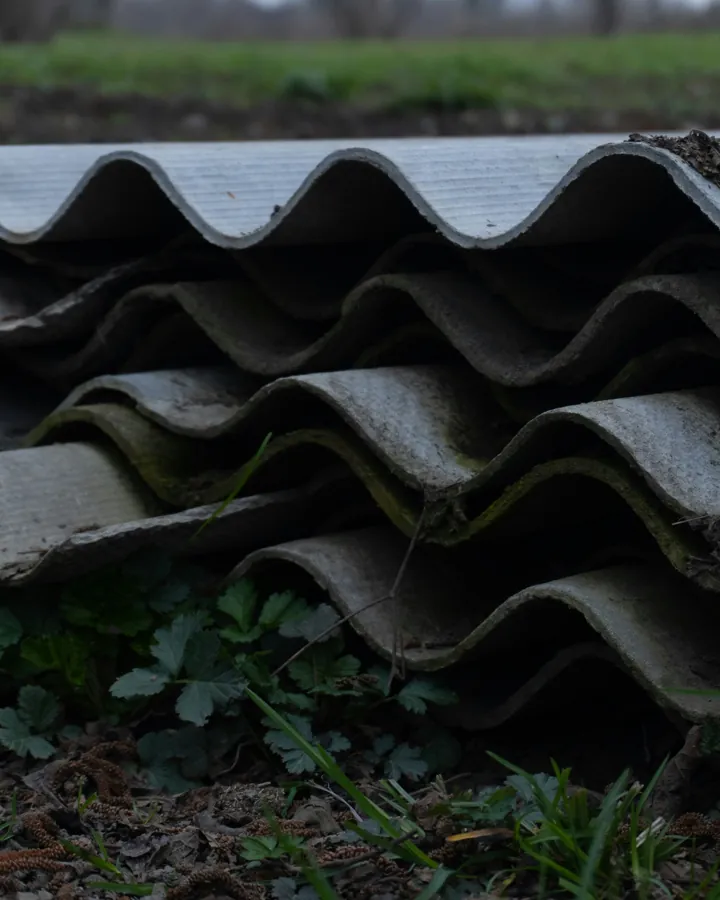
Most asbestos in South African buildings is asbestos cement: fibre bound into cement and pressed into sheets, pipes and boards. The rest is softer material that crumbles more easily. This is where each one turns up in a building put up before 2008, and what removing it counts as under the 2020 regulations.
| Material | Where you find it | Removing 10 m² or more |
|---|---|---|
| Roof sheets corrugated and IBR profile, ridges | Roofs of houses, schools, factories, carports | Type 2 Bound in cement |
| Roof slates and tiles flat fibre-cement | Pitched roofs, mostly older houses | Type 2 Bound in cement |
| Gutters, downpipes, fascias | Eaves and roof edges | Type 2 Bound in cement |
| Ceiling and eaves boards | Ceilings, eaves, verandas | Type 2 Bound in cement or insulating board |
| Wall cladding and panels | Prefab classrooms, factory walls, partitions | Type 2 Bound in cement |
| Water and sewer pipes | Underground mains, farm and factory lines | Type 2 Bound in cement |
| Water tanks | Roofs, stands, ceiling voids | Type 2 Bound in cement |
| Vinyl floor tiles and black adhesive | Floors in older buildings | Type 3 Not cement; lab test decides |
| Textured and sprayed ceiling coatings | Popcorn and sprayed ceilings | Type 3 Friable |
| Pipe and boiler lagging, insulation | Plant rooms, boilers, hot-water lines | Type 3 Friable |
| Contaminated soil | Around old mines and demolition sites | Type 3 Loose fibre |
How much asbestos is in them varies. Asbestos-cement roof sheets are roughly 70% cement, 20% water and 10% asbestos (Occupational Health Southern Africa, 2021); asbestos-cement water pipes hold about 15 to 20% (Helen Suzman Foundation). More on the two most common: asbestos ceiling boards and asbestos cement pipes.
Bound and friable ACM: why the difference matters
In asbestos cement, the fibres are locked into the cement, so intact sheets, pipes and boards shed very little. The NIOH says asbestos-cement roofs do not seem to pose a health risk to occupants while they are kept in good condition. Friable materials such as lagging, insulation and sprayed coatings crumble under hand pressure and release fibres easily; the NIOH calls them far more dangerous than low-percentage ACMs.
The regulations follow the same split. Under regulation 1:
- Type 1: painting asbestos cement without surface preparation, or removing less than 10 m² of asbestos-cement products, gutters, piping or insulating board, not repeated on the same site within six months. No registration needed.
- Type 2: repairing or sealing asbestos cement without surface preparation, or removing asbestos cement or insulating board. Needs a Type 2 registered contractor.
- Type 3: removing, repairing or sealing any other asbestos-containing material. Needs a Type 3 registered contractor.
How to tell if a material contains asbestos
You can’t, by looking. The NIOH says visual checks are not reliable and laboratory analysis is often needed, and its rule of thumb is simple: when in doubt, assume the material contains asbestos.
The date is the best clue. Asbestos was banned on 28 March 2008, so fibre-cement sheets, boards and pipes installed before then are suspect, and anything from before 1985 almost certainly is. A sample sent to a laboratory settles it. How to tell if a roof is asbestos, and who tests for asbestos and what it costs.
The asbestos inventory: what employers must keep
If a business has asbestos-containing material in its premises, the 2020 regulations make it the employer’s job to find it and record it. Regulation 3 covers identifying asbestos in place; regulation 4 requires a competent person to enter each material into an inventory kept at the premises, with:
- the date it was identified, a description, the quantity and how far it has deteriorated;
- its location on a floor plan, and confirmation that it is labelled;
- its risk category from the asbestos risk assessment, and how people could be exposed.
The inventory is reviewed at least every 24 months, and sooner if more asbestos is found or a material is damaged, sealed or removed. The contractor and the approved inspection authority get a copy before any removal or repair starts, and a new owner gets one when the property changes hands.
What to do about ACM in your building
If it is intact, leaving it alone is allowed. Don’t cut, drill, sand, scrub or pressure-wash it: that is what puts fibres in the air, and the regulations ban preparing asbestos-cement surfaces. Employers also need a written asbestos management plan, which includes a plan for phasing the material out and is reviewed at least every eight years (regulation 6).
When it has to go, the job runs the same way for every material: a registered asbestos contractor for the right type of work, seven days’ notice to the Department of Employment and Labour, a written plan of work, disposal at a licensed landfill, and an asbestos clearance certificate at the end. How we handle each one is on asbestos removal by material.
Questions people ask
What does ACM mean in asbestos?
ACM stands for asbestos-containing material. South Africa’s Asbestos Abatement Regulations, 2020 define it as asbestos itself and any material that contains asbestos, including asbestos-cement products, coatings, insulating board, insulation, textured decorative coatings and contaminated soil.
What percentage of asbestos makes a material ACM?
The South African definition sets no minimum: any material that contains asbestos counts. For comparison, asbestos-cement roof sheets are about 10% asbestos and asbestos-cement water pipes about 15 to 20%.
Is asbestos-containing material dangerous?
Intact asbestos cement that nobody disturbs is low risk, because the fibres are bound in. It becomes dangerous when it is broken, cut, drilled, sanded or pressure-washed. Friable materials such as lagging, insulation and sprayed coatings are far more dangerous because they release fibres easily.
Can I remove asbestos-containing material myself?
Only small asbestos-cement jobs: removing less than 10 m² of asbestos-cement products, not repeated on the same site within six months, is Type 1 work and does not need a registered contractor. Anything bigger, and any friable material, needs a contractor registered for Type 2 or Type 3 work.
Where is asbestos found in a South African house?
Mostly in the roof sheets, gutters, downpipes, fascias, ceiling and eaves boards and old water tanks of houses built before 2008. Older vinyl floor tiles, their black adhesive and textured ceilings can also contain it.
Asbestos-containing material (ACM) is asbestos and any material that contains it. In South African buildings put up before the 28 March 2008 ban, it is mostly asbestos cement: roof sheets, slates, gutters, fascias, ceiling boards, cladding, pipes and water tanks, about 10 to 20% asbestos bound into cement. Friable ACM such as lagging, insulation and sprayed ceilings is rarer and more dangerous. Only a laboratory test confirms asbestos. Removing 10 m² or more of asbestos cement needs a Type 2 registered contractor; friable material needs Type 3. Employers must keep an inventory of the ACM in their premises, reviewed at least every 24 months.
Get a compliant quote
Send the address and a photo on WhatsApp. The final price is confirmed on a site visit, and every job ends with a clearance certificate.