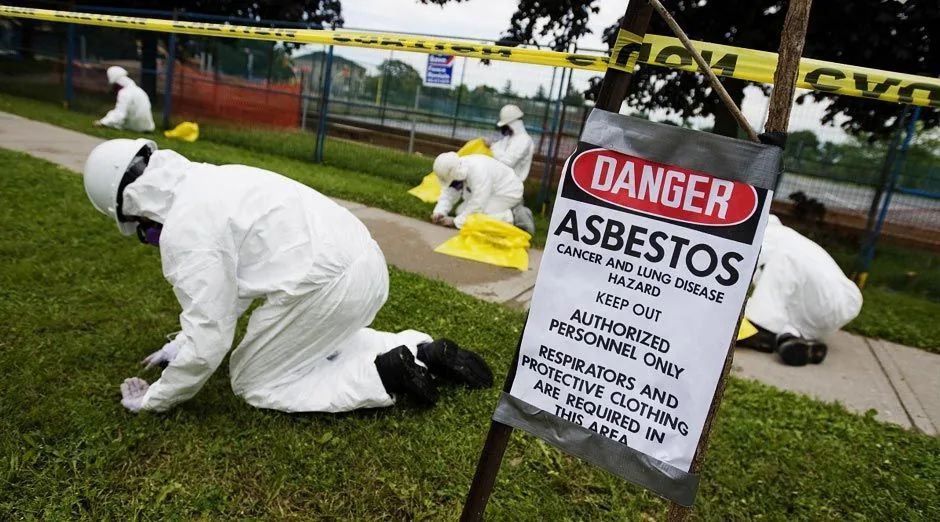
- Asbestos removal
- Removal process
How asbestos roof removal works in South Africa
Asbestos roof removal in South Africa is 7 days of notice, 1 to 2 days on the roof for a house, licensed disposal, and a clearance certificate at the end. About three weeks start to finish.
- Registered contractorsDepartment of Employment and Labour, Type 2 and 3
- Certificate on every jobAir monitoring and clearance certificate
- Licensed disposalLicensed landfill, disposal certificate
- Itemised quoteEvery quote itemised line by line
- Prices you can seeR150–R250/m², our Gauteng rates, Sept 2026
Asbestos roof removal is Type 2 asbestos work once more than 10 m² of asbestos-cement comes off. It must be done by a contractor registered with the Department of Employment and Labour, with the Department notified 7 days before work starts, under a written plan of work, using wet hand removal, with the sheets sealed and labelled, carried under a waste manifest and disposed of at a landfill designated for asbestos. An Approved Inspection Authority monitors the air and issues the clearance certificate afterwards. The clearance certificate guide explains who issues it and what to keep.
Who is allowed to remove an asbestos roof
The 2020 regulations sort asbestos work into three types. Ask for the registration certificate before you sign anything. Most owners put a new roof on in the same job; asbestos roof replacement cost sets out the all-in numbers.
Type 1
Less than 10 m² of asbestos-cement, or painting without surface preparation. A single small shed. Anyone may do it, with wrapping and licensed disposal.
Type 2
Removal of asbestos-cement sheets, or repair and encapsulation without surface preparation. Every house and factory roof. Registered Type 2 or 3 contractor.
Type 3
Removal, repair or encapsulation where surface preparation is required, or friable material such as lagging. Registered Type 3 contractor only.
What happens, step by step
- Photos and a site visit. You send the suburb, size and photos; the site visit confirms it is asbestos, measures, checks access, and looks for asbestos gutters, ridges and cladding.
- Fixed quote. Removal rate per m², the new roof, disposal, air monitoring and the certificate, any timber-repair rate. You co-sign the plan of work.
- Notification, day 1. The Department of Employment and Labour is notified in writing at least 7 days before work starts, on the official form. That form carries the registered asbestos contractor’s registration number, and you sign it as the asbestos client. The approved inspection authority is appointed in writing.
- Site set-up, day 8. A regulated area is marked and signed. Workers wear disposable coveralls and P3 respirators. Household, pets and neighbours stay clear of the work zone; you do not move out.
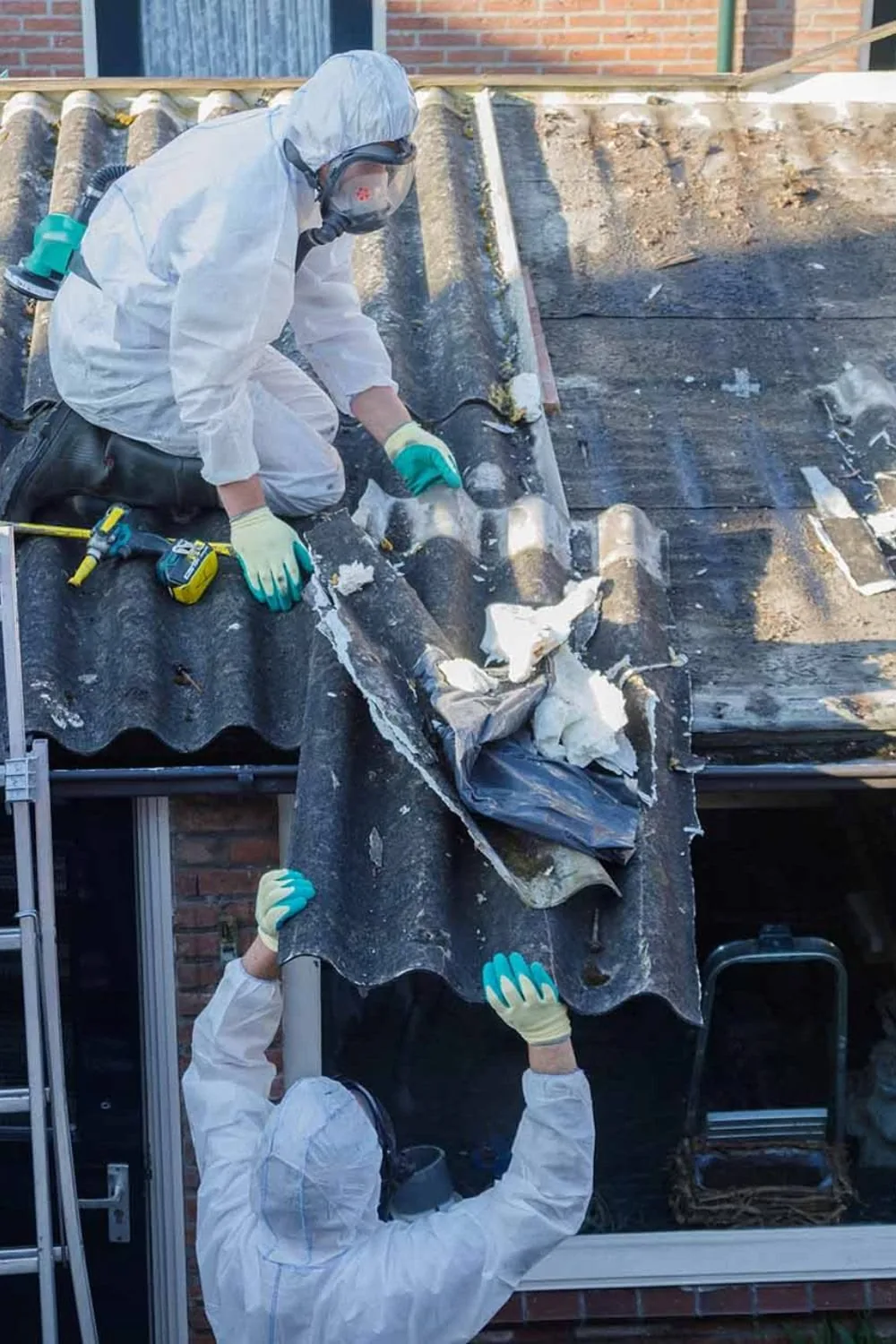
- Wet, hand removal, days 8 to 9. Sheets are wetted, fixings undone, each sheet lowered whole. No grinders, no drilling, no breaking, no dropping into a skip. Ridges, gutters, downpipes and fascias come off in the same window.
- Wrap and label. Every sheet double-wrapped in heavy-duty polythene and labelled as asbestos waste. The area is cleaned by wet wiping and HEPA vacuum, never dry sweeping.
- Transport and disposal, day 9 to 10. The transporter named in the plan of work takes the load, under a waste manifest, to a landfill designated for asbestos waste. For Gauteng jobs that is typically the Holfontein hazardous-waste site at Springs; elsewhere it is the nearest landfill licensed for asbestos (sites by province). You receive the disposal certificate.
- Air monitoring and clearance, day 10 to 12. The Approved Inspection Authority monitors the air and issues the asbestos clearance certificate. Keep it: buyers, insurers and solar installers ask for it.
- New roof, days 10 to 14. Purlins checked and repaired where needed, then steel sheeting or tiles. For a 150 m² house, 2 to 4 days; weather-tight by the end of each working day.
How long it takes
| Stage | 150 m² house | 500 m² factory |
|---|---|---|
| Site visit to signed quote | 2 – 5 days | 1 – 2 weeks |
| Notification period | 7 days | 7 days |
| Removal on site | 1 – 2 days | 4 – 8 days |
| Clearance certificate | 1 – 3 days after | 1 – 3 days after |
| New roof | 2 – 4 days | 1 – 2 weeks |
| Start to finish | About 3 weeks | 4 – 8 weeks |
Your duties as the client
- Provide the asbestos inventory if the building has one, or have the contractor update it.
- Appoint the registered contractor and the Approved Inspection Authority in writing.
- Sign the 7-day notification form, which carries the registered contractor’s registration number, and co-sign the plan of work.
- Keep everyone who is not part of the work out of the regulated area.
- Keep the disposal and clearance certificates with the property's papers.
What a non-compliant removal looks like
A team that can start tomorrow, breaks the sheets to get them down faster, loads them loose on a bakkie and disappears with the waste, which ends up dumped on open ground. No notification, no monitoring, no certificate, and fibre in your ceiling void. The saving is usually a few thousand rand on a house. The exposure is the whole household's, and the missing certificate turns up at the sale.
Before the job starts, check the company against the national register of asbestos contractors. Pipes, cladding or ceilings rather than a roof? See asbestos removal for pipes, cladding and ceilings. If a cracked sheet is what brought you here, see what you may legally do about a leaking asbestos roof.
Questions people ask about the removal process
Do I have to move out while the asbestos roof is removed?
For a roof, usually not. The work happens outside and above the ceiling, the regulated area is the roof and the ground around it, and the house is closed up during removal. You are told which rooms to keep shut, and cleaning is by wet wiping and HEPA vacuum, not sweeping.
Why does removal take 7 days to start?
The Asbestos Abatement Regulations, 2020 require the contractor to notify the Department of Employment and Labour at least 7 days before asbestos work begins. A contractor who can start tomorrow either has not notified or is not registered.
What is an asbestos clearance certificate?
A certificate issued by an Approved Inspection Authority after Type 2 or 3 work, confirming the area was cleaned and air monitoring showed fibre levels below the limit. Keep it: buyers, insurers and solar installers ask for it.
Where does the asbestos go?
To a landfill licensed for asbestos under the National Environmental Management: Waste Act, 2008. For Gauteng jobs that is typically the Holfontein hazardous-waste site at Springs on the East Rand; elsewhere it is the nearest landfill licensed for asbestos. You get the disposal certificate as proof.
Can the new roof go on in the same job?
Yes, and it is the simplest route: one quote, one programme, the house weather-tight by the end of each day. The removal must still be done under the asbestos registration and the new roof under normal building rules.
Does asbestos have to come off before a building is demolished?
Yes. Regulation 24(i) of the Asbestos Abatement Regulations, 2020 bans any demolition work before all asbestos and asbestos-containing building material has been identified in the inventory of asbestos in place and safely removed or otherwise controlled. The asbestos roof comes off first, then the building comes down.
Can an asbestos roof be removed completely?
The sheets themselves come off entirely and go to a licensed landfill. What is tested afterwards is the air: the job is only signed off with a clearance certificate once measured airborne asbestos fibres are below the clearance indicator in the regulations, 0.01 fibres per millilitre.
A compliant asbestos roof removal takes about three weeks: seven days' written notice to the Department of Employment and Labour, one to two days on the roof for a 150 m² house, disposal at a licensed landfill, and a clearance certificate from an approved inspection authority. Only a registered asbestos contractor may do it.
Get the compliant version of this, quoted
Send the suburb, size and a photo. You get a fixed quote that covers every step above, including the certificate.